
Blended Learning & Skills Sessions
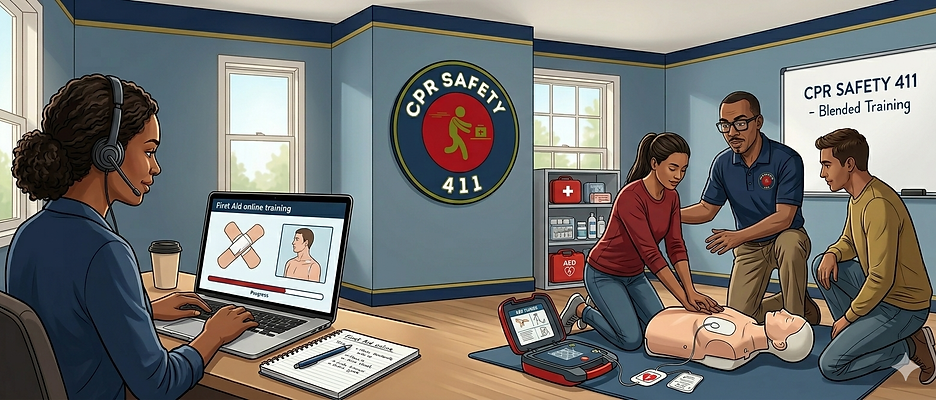
Complete the online portion of your CPR, First Aid, AED, or BLS course at your own pace, then meet with CPR Safety 411 for the required hands-on skills session.
Blended learning is a flexible training option that combines online coursework with an in-person skills session. It is ideal for busy professionals, healthcare teams, childcare providers, workplaces, and students who need certification but want to reduce time spent in a classroom.
Who This Option Is For
This option is ideal for:
-
Healthcare providers completing HeartCode BLS
-
Childcare providers needing First Aid/CPR/AED certification
-
Employers who want to reduce classroom time
-
Staff members who missed a group training class
-
Students who already completed an online course
-
Individuals who need a hands-on skills check for certification
-
Organizations looking for flexible group training
Blended learning is especially helpful when students need certification but cannot attend a full instructor-led class. The online portion covers course knowledge, while the skills session gives students hands-on practice and evaluation.
What Happens During Skills Session
BLS Skills
For Basic Life Support, participants may practice and demonstrate:
-
High-quality CPR for adults, children, and infants
-
One-rescuer and two-rescuer CPR
-
Use of a bag-mask device when required
-
AED use
-
Relief of choking
-
Team-based response and communication
-
Skills testing required for BLS certification
CPR & AED Skills
For CPR/AED courses, participants may practice:
-
High-quality chest compressions
-
Rescue breaths when required by the course
-
AED use
-
Choking response
-
Adult, child, or infant CPR depending on the course
First Aid Skills
For First Aid or First Aid/CPR/AED courses, participants may review and practice skills such as:
-
Bleeding control
-
Medical emergencies
-
Injury response
-
Burns, wounds, and environmental emergencies
-
Other first aid skills required by the course
The skills session is not just a quick formality. It gives students hands-on practice, instructor feedback, and the opportunity to demonstrate the required skills for certification.
How Blended Learning Works
CPR Safety 411 offers flexible training options designed to match your organization’s needs:
1. Complete Online Course
Students complete the assigned online learning portion before attending the in-person session. Proof of completion is required before certification can be issued.
2. Attend the hands on skill session
Participants meet with an instructor to practice and demonstrate the required skills using CPR manikins, AED trainers, and first aid training supplies when applicable.
3. Receive certification after successful completion
After the online portion and hands-on skills session are successfully completed, eligible participants receive their digital certification.
Certification Details
-
Available for select CPR, AED, First Aid, and BLS courses
-
Certification is typically valid for 2 years
-
Online coursework must be completed before the skills session
-
Proof of online completion is required
-
BLS includes required testing
-
First Aid/CPR/AED testing requirements may vary by course format
-
Digital certification is issued after all required course components are completed
If you are unsure which online course you completed, CPR Safety 411 can review the course information before scheduling your skills session.
Why Train with CPR Safety 411
-
Clear, supportive instruction that helps students feel prepared
-
Hands-on practice with feedback from an experienced instructor
-
Flexible scheduling for individuals and groups
-
On-site options for workplaces and organizations
-
Local service throughout Central Pennsylvania
-
Help choosing the correct course and certification path
Blended learning gives students flexibility, but the hands-on portion is where confidence is built. CPR Safety 411 helps make that part practical, clear, and stress-free.