
The Chain of Survival: How CPR Fits Into Saving Lives

When someone suffers sudden cardiac arrest, survival often depends on what happens in the first few minutes. Emergency responders may be highly trained and well equipped, but they usually aren’t the first people on scene. That responsibility often falls to everyday bystanders.
This is where the Chain of Survival comes in.
The Chain of Survival is a concept used by organizations like the American Heart Association (AHA) to describe the series of critical actions that improve a person’s chances of surviving cardiac arrest. Each step in the chain supports the next. If one link is missing or delayed, the chances of survival decrease dramatically.
Understanding these links can help everyday people recognize how important their role can be during an emergency.
What Is the Chain of Survival?
The Chain of Survival represents the key steps that must occur quickly during a cardiac emergency. While the exact wording may vary slightly depending on the situation, the core links include:
Early recognition of cardiac arrest and calling 911
Early CPR with high-quality chest compressions
Rapid defibrillation with an AED
Advanced life support from EMS
Post–cardiac arrest care in the hospital
Each step works together to keep oxygenated blood flowing to the brain and vital organs until the heart can be restarted.
Link 1: Early Recognition and Calling for Help
The first step is recognizing that something is wrong.
Sudden cardiac arrest often looks like this:
The person suddenly collapses
They are unresponsive
They are not breathing normally (or not breathing at all)
If you see these signs, call 911 immediately or direct someone nearby to call. Early activation of emergency services ensures professional help is already on the way while lifesaving actions begin.
Many people hesitate here because they’re unsure if it’s truly an emergency. When in doubt, it’s always better to call.
Link 2: Early CPR
This is the link where bystanders can make the biggest difference.
CPR helps maintain blood flow to the brain and heart while waiting for defibrillation or advanced care. Without circulation, brain damage can begin in as little as 4–6 minutes.
High-quality CPR means:
Pushing hard and fast in the center of the chest
A rate of 100–120 compressions per minute
Allowing the chest to fully recoil between compressions
Minimizing interruptions
Even hands-only CPR (chest compressions without breaths) can significantly improve survival compared to doing nothing.
This is why CPR training is so valuable. When people know what to do, they’re far more likely to step in and help.
Link 3: Rapid Defibrillation
Many cardiac arrests are caused by a dangerous heart rhythm called ventricular fibrillation, where the heart quivers instead of pumping effectively.
An Automated External Defibrillator (AED) can deliver a controlled electric shock to reset the heart’s rhythm. AEDs are designed for public use and provide clear voice instructions so that even untrained bystanders can operate them.
AEDs are increasingly found in places like:
Airports
Schools
Gyms
Offices
Community centers
Using an AED within the first few minutes dramatically improves survival rates.
Link 4: Advanced Life Support
Once emergency medical services arrive, paramedics provide advanced care such as:
Airway management
Medications
Advanced cardiac monitoring
Rapid transport to a hospital
The goal is to stabilize the patient and restore a sustainable heart rhythm.
Link 5: Post–Cardiac Arrest Care
Survival doesn’t end when the heart starts beating again. Hospital teams provide specialized care to protect the brain and other organs.
This may include:
Intensive monitoring
Targeted temperature management
Cardiac interventions
Ongoing respiratory support
These treatments help improve long-term survival and neurological recovery.
Why Bystanders Matter So Much
One of the most important lessons from the Chain of Survival is this:
The first link often belongs to ordinary people.
Most cardiac arrests occur outside of hospitals, frequently in homes, workplaces, or public spaces. When bystanders start CPR quickly and use an AED if available, survival rates increase dramatically.
Without those early actions, even the best emergency medical teams may arrive too late.
Training Strengthens Every Link
Learning CPR doesn’t just teach a skill—it builds confidence to act when seconds matter.
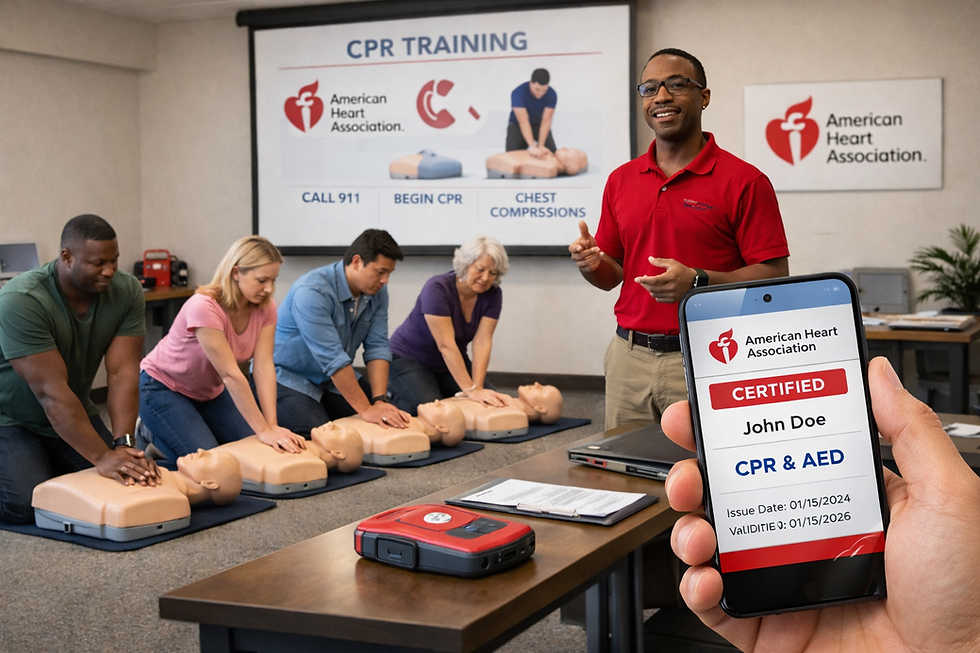
At CPR Safety 411, we provide training designed to help individuals, workplaces, and community organizations become stronger links in the Chain of Survival. Our courses include:
CPR and AED training
First Aid certification
Basic Life Support (BLS) for healthcare providers
Bloodborne pathogens training
Stop the Bleed training
Instructor courses for those who want to teach lifesaving skills
Training is available through on-site workplace classes as well as flexible options like our CPR From Home program.
You can explore available programs on our training page:
The Takeaway
The Chain of Survival is a powerful reminder that saving a life is rarely the result of a single action. It’s the result of multiple steps happening quickly and effectively.
But the chain often begins with someone nearby choosing to act.
Learning CPR means that if an emergency happens in your home, workplace, or community, you’ll know how to become the critical first link in that chain—and potentially help save a life.


Comments