
Why the American Heart Association Is the Gold Standard for CPR Training

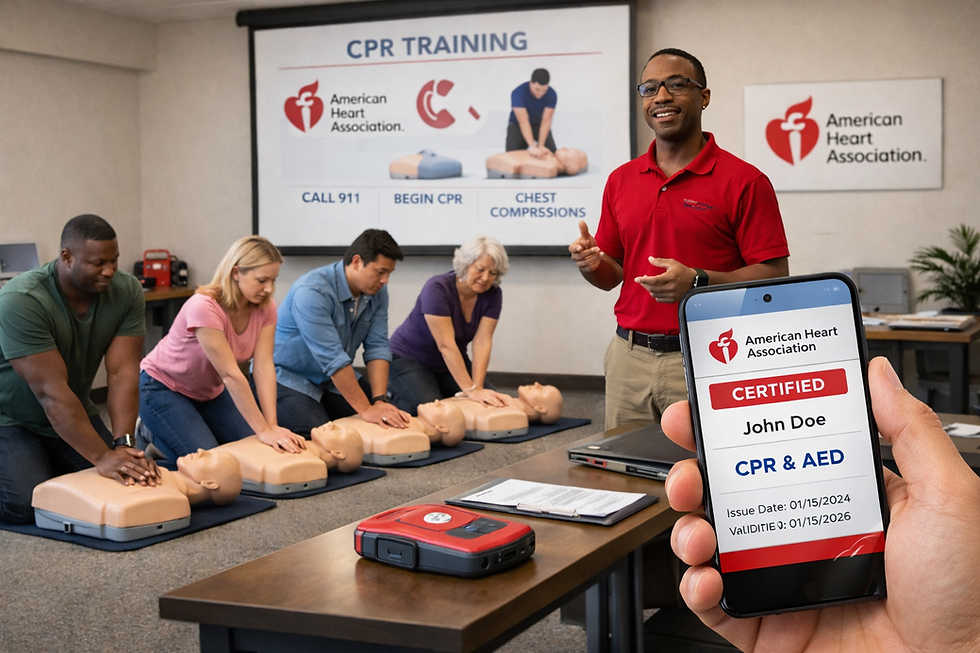
When people look for CPR training, they often notice several organizations offering certification. While many programs teach lifesaving skills, the American Heart Association (AHA) has long been recognized as the gold standard for CPR and emergency cardiovascular care training.
From hospitals and healthcare systems to schools, workplaces, and public safety organizations, AHA certifications are widely trusted because they are built on rigorous science, consistent standards, and decades of lifesaving research.
Let’s take a closer look at why AHA training stands out.
1. Evidence-Based Guidelines Backed by Global Research
One of the biggest reasons the American Heart Association leads the field is its commitment to scientific research and evidence-based guidelines.
Every five years, the AHA releases updated Guidelines for CPR and Emergency Cardiovascular Care (ECC). These guidelines are developed through collaboration with international researchers and organizations reviewing thousands of scientific studies on cardiac arrest survival.
The result is training that reflects the most current science available, including updates on:
Chest compression depth and rate
Rescue breathing techniques
AED use
Team-based resuscitation
Post-cardiac arrest care
When you take an AHA class such as Basic Life Support (BLS) or CPR & AED, you’re learning techniques that are constantly refined based on real-world outcomes and medical research.
2. Trusted by Hospitals and Healthcare Professionals
Most hospitals, clinics, and healthcare organizations require AHA certification for their staff.
Programs like:
Basic Life Support (BLS)
Advanced Cardiovascular Life Support (ACLS)
Pediatric Advanced Life Support (PALS)
are designed specifically for healthcare providers who must respond quickly and effectively during life-threatening emergencies.
Because these courses are built for clinical environments, many employers view AHA training as the most credible and rigorous CPR certification available.
Healthcare offices and dental practices frequently choose programs like Basic Life Support (BLS) to ensure their teams meet professional and regulatory standards.
3. Standardized, High-Quality Training Worldwide
Another major strength of the American Heart Association is consistency.
AHA instructors follow a structured training system that ensures students across the country—and around the world—are learning the same critical skills.
This includes:
Standardized course videos and materials
Instructor credentialing and monitoring
Skills testing requirements
Official certification eCards
This structure ensures that someone trained in Pennsylvania has received the same level of instruction as someone trained in California, Canada, or Europe.
4. Emphasis on Hands-On Skill Mastery
Reading about CPR is one thing. Performing it correctly under pressure is another.
AHA courses emphasize hands-on practice and skill verification, ensuring that students can:
Deliver effective chest compressions
Use an AED properly
Work as part of a coordinated rescue team
Recognize cardiac arrest quickly
This focus on practical training is why many organizations prefer AHA programs over fully online certifications.
At CPR Safety 411, students practice these skills in small, instructor-led classes or through blended learning programs that combine online coursework with in-person skills sessions. You can explore available options on the Training Courses page.
5. A Global Leader in Cardiac Arrest Survival
The American Heart Association is not just a training provider — it is one of the largest cardiovascular research organizations in the world.
For decades, the AHA has led initiatives that improve survival from cardiac arrest, including:
Public access AED programs
Community CPR awareness campaigns
Research into sudden cardiac arrest
Development of the Chain of Survival model
These efforts have helped transform CPR from a rarely performed intervention into a critical public health skill that saves hundreds of thousands of lives each year.
6. Pathways for Professional CPR Instructors
Another reason AHA training stands out is its strong instructor development program.
Professionals who want to teach CPR can become certified through instructor pathways that include:
Instructor Essentials courses
Faculty mentorship
Monitoring and teaching evaluations
This ensures instructors maintain high teaching standards and stay current with guideline updates.
If you’re interested in teaching lifesaving skills, you can learn more about becoming an instructor through the Instructor Courses offered by CPR Safety 411.
7. Recognized Certification for Employers and Compliance
For many industries, CPR certification isn’t optional—it’s required.
Organizations often request AHA certification because it is:
Recognized by hospitals and healthcare systems
Accepted by OSHA-compliant safety programs
Trusted by schools, childcare programs, and public agencies
Widely accepted across industries
This makes AHA training a safe choice for both individuals and organizations that want a certification employers recognize and trust.
Final Thoughts
Learning CPR is one of the most important skills a person can gain. While several organizations offer training, the American Heart Association remains the gold standard because of its science-based guidelines, rigorous training standards, and global credibility.
Whether you’re a healthcare professional, workplace responder, coach, teacher, or concerned community member, high-quality CPR training can give you the confidence to act when it matters most.
If you’re interested in learning lifesaving skills or scheduling training for your team, explore the available courses offered by CPR Safety 411, including CPR & AED, Basic Life Support (BLS), and First Aid Training.


Comments