
Why People Hesitate to Help During Emergencies — and How We Can Change That
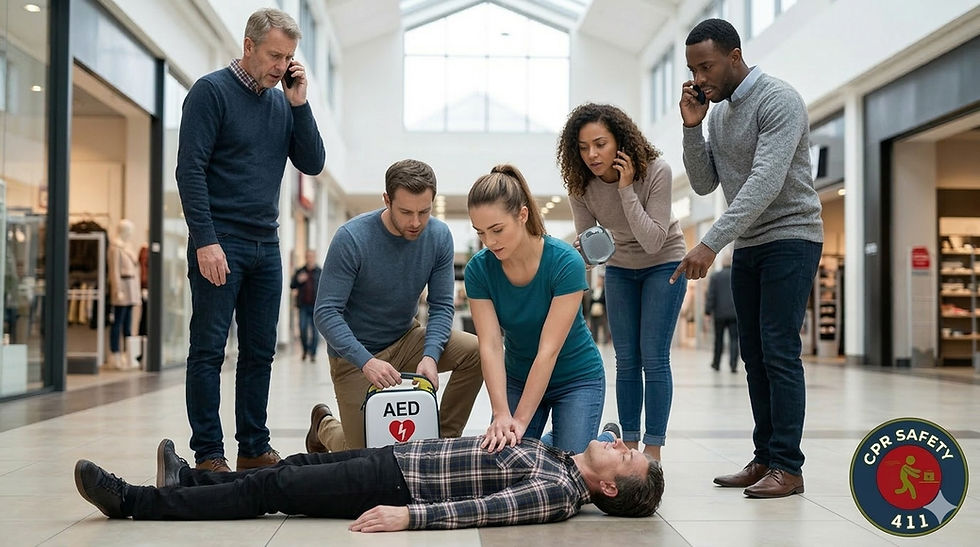
Someone collapses in front of a crowd. A few people notice. Everyone looks around. But for several long, critical seconds, no one moves.
It sounds cold, but usually it is not. Most people are not ignoring the emergency because they do not care. They freeze because something gets in the way.
At CPR Safety 411, this is one of the biggest concerns we hear from people: What if I panic? What if I do it wrong? What if I make things worse? Those fears are real, and they are common. The good news is that they can be overcome.
Understanding why people hesitate is the first step toward helping more people act when every second counts.
1. Fear of Doing Something Wrong
This is probably the biggest barrier of all.
Many people worry they will hurt the person, perform CPR incorrectly, or somehow make the situation worse. But in a true cardiac arrest, doing nothing is the far greater danger. The American Heart Association says immediate CPR can double or triple the chance of survival after cardiac arrest.
That is why CPR training matters so much. It replaces uncertainty with a simple plan. Instead of guessing, you know how to check the scene, call 911, begin compressions, and use an AED if one is available. Training turns panic into action.
2. Fear of Legal Consequences
Another major reason people hesitate is fear of being sued.
A lot of people assume that if they step in and something goes wrong, they could face legal trouble. In reality, Good Samaritan laws are designed to protect people who provide emergency care in good faith. In Pennsylvania, state law says a person who in good faith renders emergency care, first aid, treatment, or rescue at the scene of an emergency generally is not liable for civil damages, except in cases such as intentional harm or gross negligence.
That legal protection exists for a reason: society wants people to help. The law is not built to punish bystanders for trying to save a life.
3. Shock and Panic in the Moment
Emergencies do not announce themselves politely. They hit fast.
When something serious happens, even calm people can feel overwhelmed. Heart racing, tunnel vision, mental blank screen — the brain can basically go into “well, this is inconvenient” mode at the worst possible moment.
CPR training helps reduce that freeze response because practice builds familiarity. When you have physically gone through the steps before, you are much more likely to do something useful when the pressure is on. That mental readiness is one of the most overlooked benefits of training.
4. Lack of Confidence
Some people took a CPR class years ago but have not used the skills since. Others have watched videos online and wonder whether that counts as “knowing CPR.” In both cases, hesitation often comes from the same place: low confidence.
The American Heart Association has reported that lack of training or knowledge is the number one reason many adults say they would not perform CPR, and others also cite fear of hurting someone or facing legal consequences.
This is why refresher training matters. Even a quick update can help people feel prepared again. Skills are easier to use when they feel familiar instead of dusty and buried in the back of your brain next to middle school math formulas.
5. Assuming Someone Else Will Step In
This is often called the bystander effect.
In public emergencies, people sometimes assume someone else is more qualified, more confident, or already taking charge. The problem is that during cardiac arrest, every second without action matters. Bystander CPR has been shown to significantly improve survival, yet overall rates still lag in many communities.
The American Heart Association puts it plainly: do not wait for someone else to step up.
If you are there, you may be the person who makes the difference.
How We Change This
The answer is not to shame people for hesitating. The answer is to prepare them before the emergency happens.
We change this by:
teaching simple, practical CPR skills
explaining Good Samaritan protections clearly
giving people hands-on practice
offering refreshers so confidence stays sharp
normalizing the idea that ordinary people can save lives
The more people in a workplace, school, church, gym, childcare center, or family who know what to do, the stronger that community becomes. Training does more than teach technique. It builds confidence, composure, and readiness.
From Hesitation to Action
At CPR Safety 411, we believe lifesaving education should be clear, practical, and empowering. We do not just teach people how to perform CPR. We help them feel ready to respond when the moment is real.
Because when someone’s heart stops, hesitation can cost precious time — but confidence can save a life.
Ready to build that confidence?
CPR Safety 411 offers CPR, First Aid, AED, BLS, Stop the Bleed, and instructor training courses for workplaces, healthcare settings, childcare providers, schools, community groups, and more. Visit CPR411.com to learn more or sign up for a class.


Comments